Book A Consultation
Paul Wilson Aesthetics - Fat Transfer Breast Augmentation | Fat Grafting Breast | Fat Injection Breast | Fat Transfer to Breast

Treatment breast

Fat Transfer Breast Augmentation

by Mr Paul Wilson

Refine the shape and volume of the breast with this fat transfer technique that will enhance fullness and create a highly natural, soft and long-lasting result.

At a glance

Expected Results

Natural volume increase, softer contours, improved skin quality, refined donor area.

Treatment Time

3–5 hours (depending on liposuction volume)

Anaesthesia

General anaesthetic

Recovery Time

2–4 weeks (for major bruising/swelling)

Return to Work

1-2 weeks

Frequency

Long-lasting; 50–70% of grafted fat survives permanently.

Treatment Overview

If you’re looking to enhance breast volume and improve shape using a natural, implant-free approach, fat grafting to the breast may be an ideal option. This procedure uses your own fat which is taken from areas such as the abdomen or thighs, to increase fullness, improve symmetry, and create a softer, natural-looking contour.

At Paul Wilson Aesthetics, our procedures are performed by a bespoke team of highly skilled accredited professionals who will support you at every stage, from initial consultation through to surgery and recovery.

Paul Wilson Aesthetics - Fat Transfer Breast Augmentation Treatment Overview
Paul Wilson Aesthetics - Fat Transfer Breast Augmentation About

What is fat grafting to the breast?

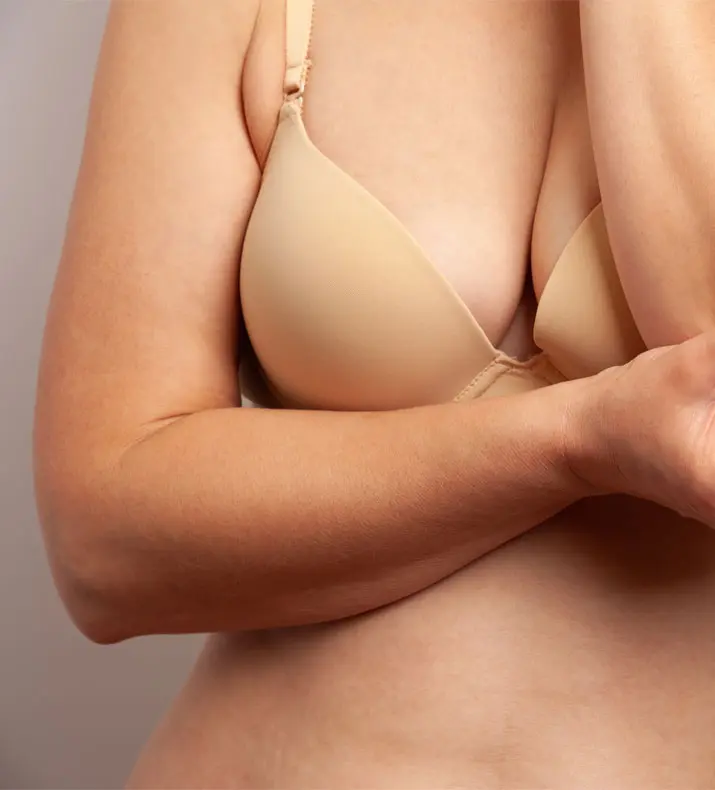
Fat grafting to the breast, also known as autologous fat transfer or a fat transfer breast augmentation, is a technique that uses your own purified fat to enhance and shape the breasts.

Fat grafting is highly versatile and can be used in several ways:

Primary augmentation: To achieve a natural, modest increase in breast size, typically up to one cup size, without implants.

Combination with breast implants (composite augmentation): Used alongside implants to camouflage implant edges (particularly in thin patients), soften the cleavage area, and refine overall contour.

Combination with mastopexy (breast lift): Helps replace volume lost during the lift, particularly in the upper part of the breast. Also improves shape without making the breasts significantly larger.

Who is a good candidate for a fat transfer to the breast?

To be a good candidate, you should be in good general health, maintain a stable weight, and ideally be a non-smoker. Adequate harvestable fat in donor areas (such as the abdomen, thighs, or flanks) is essential to achieve a meaningful result.

What to expect during a fat transfer to the breast

Consultation
During your consultation, your surgeon will discuss your goals and assess both the breasts and potential donor areas. This includes evaluating breast shape, volume, skin quality, and symmetry, as well as examining areas such as the abdomen, flanks, or thighs to ensure there is enough healthy fat available for transfer.

Your surgeon will explain how fat transfer works, including its limitations such as the modest increase in volume achievable per session. If you are considering fat grafting as part of a combined procedure (such as with a breast lift or implants), the planned surgical approach will also be outlined in detail.

Your medical history, including any previous breast imaging, will be reviewed, and the importance of ongoing screening (such as mammograms) following fat grafting will be discussed.

This appointment is an opportunity to ask questions and ensure you feel fully informed and confident before proceeding.

Anaesthesia and Procedure Time
Fat transfer to the breast is performed under general anaesthetic. The length of the procedure will depend on the number of donor sites used and whether the fat grafting is being performed alone or combined with a breast lift or implants.

Surgery
Fat transfer to the breast involves several precise stages:

Harvesting
Liposuction is performed on the donor areas, commonly the abdomen, thighs, or flanks, using gentle, low-pressure techniques to protect the viability of the fat cells.

Processing
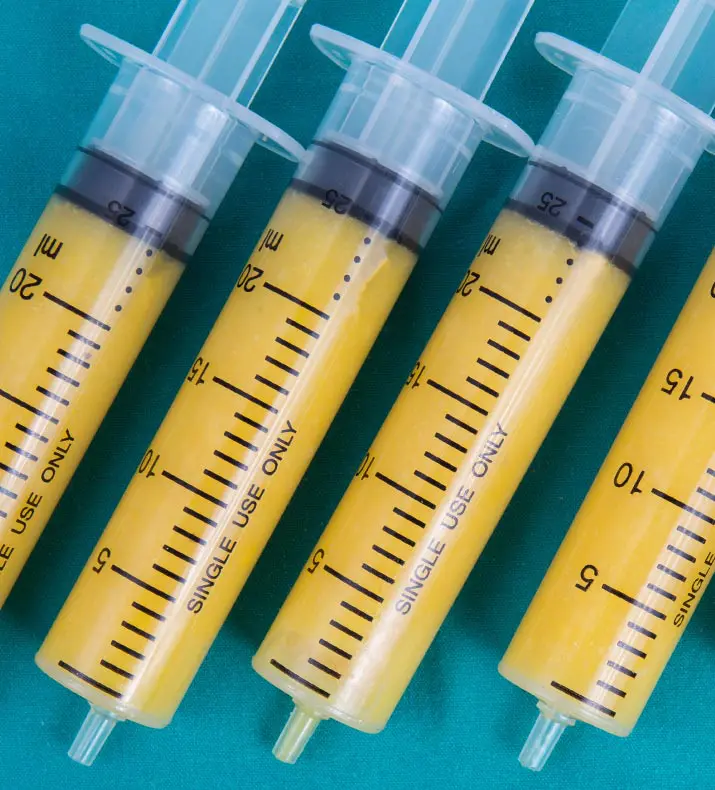
The harvested fat is carefully purified, usually through centrifugation or filtration, to remove excess fluids, damaged cells, and impurities. This produces concentrated, healthy fat suitable for grafting.

Grafting
Using fine cannulas, the purified fat is injected into the breast in tiny micro-droplets. This layering technique maximises contact with the blood supply, helping the fat cells survive and settle naturally. Great care is taken to avoid injecting fat into the breast ducts or too close to the chest muscle, ensuring breast tissue remains healthy and imaging remains clear. For larger volumes of fat transfer, a technique called expansion vibration lipo-filling is frequently used to evenly disperse the fat droplets through the breast.

Combination procedures
If your fat transfer is part of a breast lift, the lift is performed first and excess skin is removed to reshape and elevate the breast.

If combined with implants (composite augmentation), the implant is placed before fat is grafted around the edges and upper part of the breast to soften the transition and create a more natural contour.

Closure
The small liposuction incisions are closed, and compression garments are applied to the donor sites to support healing and reduce swelling. A soft supportive bra may be recommended for the breasts, depending on your specific procedure


Paul Wilson Aesthetics - Fat Transfer Breast Augmentation Benefits 1

What are the benefits of fat transfer to the breast?

Benefits can include improved breast shape, a subtle increase in volume and simultaneous contouring of the donor site. A fat transfer to the breast offers several benefits, including:

  • A natural look and feel, as the breasts are enhanced using your own fat
  • Improved breast shape, contour, and symmetry
  • A modest, subtle increase in volume without the need for implants
  • Regenerative qualities of the transferred fat may also enhance skin quality in the treated area.
  • Simultaneous contouring of the donor areas through liposuction
  • No risk of implant-related complications
  • Long-lasting results when weight remains stable
Arrow Book a consultation now
Paul Wilson Aesthetics - Fat Transfer Breast Augmentation Benefits 2

Recovery and results of fat grafting to the breast

Recovery after fat grafting to the breast involves healing of both the donor areas and the breasts. You may be able to go home the same day if the procedure is performed on its own, although some patients may require an overnight stay for monitoring and pain relief.

What to expect
Bruising, swelling, and tenderness are normal in the early postoperative period. These symptoms affect both the breasts and the liposuction areas and can be managed with prescribed pain medication.

Compression garments
Compression garments are essential for the donor sites and must be worn for several weeks to reduce swelling and help contour these areas. A supportive surgical bra may also be recommended to keep the breasts secure during the initial healing phase.

Activity and movement
Rest is advised during the first week. Light walking can usually be resumed shortly after surgery, but strenuous exercise, heavy lifting, and upper-body workouts should be avoided for at least 4–6 weeks to protect the healing fat grafts.

Fat survival and long-term results
Some of the transferred fat will naturally be reabsorbed by the body during the first 3–6 months. As the remaining fat establishes its blood supply, the final shape and volume become more stable. Once fully integrated, the results are long-lasting, especially with a stable weight.  We expect 60-70% of the fat to be retained. Because of this we will often overfill the breast to achieve the expected outcome.

Follow-up care
Follow-up appointments will be arranged to monitor your progress, assess fat retention, and guide you on caring for both the donor areas and the breasts. Further imaging may be recommended as part of routine breast screening.

Risks and potential complications of a fat transfer breast augmentation

As with any surgical procedure, a bra-line back lift carries certain risks. These may include:

  • Infection or bleeding
  • Seroma (fluid build-up)
  • Delayed wound healing
  • Fat necrosis
  • Irregularities or asymmetry in breast shape or volume

Your surgeon will discuss all potential risks with you during your consultation to ensure you are fully informed before making any decisions.

Paul Wilson Aesthetics - Fat Transfer Breast Augmentation Post Op Recovery

Procedure Video

View these resources to help educate and inform when researching your treatment of choice.

They are designed to guide you through every aspect of your treatment before booking a consultation.

Arrow Book a consultation now

Fees

The cost of this procedure can vary significantly depending on whether it is performed as a standalone fat transfer, combined with implants (composite augmentation), or carried out alongside a mastopexy. The extent of liposuction required for fat harvesting also influences the final cost.

Prices start from

£10,100

Arrow Discover our full treatment pricelist
Mr Paul Wilson - FAQ

FAQ

Modern fat grafting techniques are generally safe and do not prevent radiologists from detecting breast cancer. However, the procedure can occasionally produce small, benign oil cysts or calcifications. These are usually distinguishable from concerning findings, but it is important to inform your radiologist that you have had fat grafting and to maintain a consistent schedule of breast imaging as advised by your surgeon.

Most surgeons can safely inject around 200–300cc of purified fat per breast in a single session. This typically results in an increase of up to one cup size. Larger volume changes often require staged procedures to ensure optimal fat survival.

Yes. The transferred fat cells behave like fat anywhere else in the body. They may increase in size with weight gain and decrease with weight loss. For long-lasting, stable results, maintaining a steady weight is recommended.

Composite augmentation combines implants with fat grafting. The added fat softens the edges of the implant, improves contour, and creates a more natural transition in the cleavage and upper breast areas.

A supportive surgical bra is usually recommended in the early recovery period to keep the breasts stable and reduce swelling. However, overly tight bras or underwire styles should be avoided until your surgeon advises, as excessive pressure can affect early fat survival.

Paul Wilson Aesthetics - Schedule your consultation

Schedule your consultation

Embark on your journey to a more confident you. Contact Mr Paul Wilson today to schedule your initial consultation and learn more about how his expertise can make a lasting, positive change. He also offers Zoom video consultations for your convenience.

Book a Consultation
Schedule your consultation