WHERE ARTISTRY MEETS REFINED AESTHETICS.
Our Treatments
Face

Breast
Body
Non-Surgical
- Filter
- Face
- Breast
- Body
- Non-Surgical

WHERE ARTISTRY MEETS REFINED AESTHETICS.
Join us on Instagram
Discover behind-the-scenes moments, patient transformations, expert tips, and the latest in surgical treatments – all in one place.
 Let's connect on Instagram
An abdominoplasty is about more than removing excess skin.
Where rectus diastasis is present, the abdominal wall can be tightened by bringing the separated tissues back towards the midline. This creates a firmer internal foundation and can help improve the shape and support of the abdomen.
The procedure may also include removing excess skin and fat, reshaping the abdominal contour and repositioning the belly button where appropriate.
Every abdominoplasty is planned around the patient’s individual anatomy, concerns and goals. Not every patient will require the same elements of surgery.
Images shared with patient consent. Individual suitability, recovery and results vary. A consultation is required to discuss the most appropriate treatment for you.
📍 Northwood Hospital, Bristol
📍 The London Welbeck Hospital
☎️ Office: 0117 332 1585
📱 Call or WhatsApp: 07414 163133
✉️ info@paulwilsonaesthetics.co.uk
#Abdominoplasty #TummyTuck #RectusDiastasis #paulwilsonaesthetics

“Can surgery make me look like my filter?”
It’s a question that comes up more often than you might think.
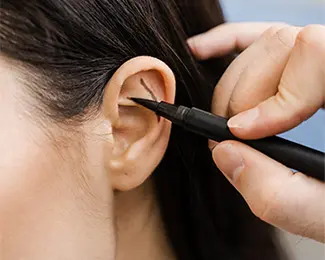
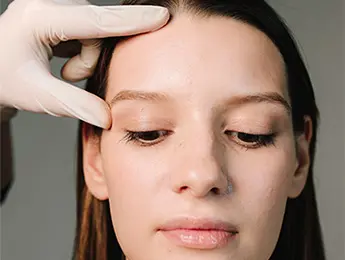
Bringing a filtered or AI edited image to a consultation can be helpful because it shows me what you are drawn to. The difficulty is that these images often change several things at once, including the eyes, nose, brows, jawline and skin. They do not take account of real anatomy or how the face moves.
Surgery works with living tissue, so a filtered image cannot be treated as an exact blueprint. It can, however, be a useful starting point for an honest conversation about what you would like to change and what may be achieved safely and naturally.
The aim should be a result that still looks like you.
📍 Northwood Hospital, Bristol
📍 The London Welbeck Hospital
☎️ Office: 0117 332 1585
📱 Call or WhatsApp: 07414 163133
✉️ info@paulwilsonaesthetics.co.uk
#plasticsurgery #AestheticSurgery #PatientEducation #paulwilsonaesthetics
A patient journey following VASER liposuction to the neck.
These photographs show the progression from careful pre-operative planning and marking, through the early post-operative stage, to three weeks after surgery.
VASER liposuction uses ultrasound-assisted technology to target and remove localised areas of fat with precision. This can make it a suitable option for carefully selected patients seeking greater definition beneath the chin and along the neck and jawline.
At three weeks, healing is still at an early stage and some swelling may remain. The result will continue to settle and refine over the coming weeks and months. Our patient is already very pleased with her progress and the outcome so far.
Thank you to our lovely patient for kindly allowing us to share her journey.
Individual suitability, recovery and results vary. A consultation is required to discuss the most appropriate treatment for you.
📍 Northwood Hospital, Bristol
📍 The London Welbeck Hospital
☎️ Office: 0117 332 1585
📱 Call or WhatsApp: 07414 163133
✉️ info@paulwilsonaesthetics.co.uk
#VASERLiposuction #NeckLiposuction #liposuction #PatientJourney #PaulWilsonAesthetics
A heartfelt patient review, shared in her own words. ✨
At just three days post-op, our patient describes the early changes she could already see, how emotional the experience felt and the care she received at Northwood Hospital.❤️🏥
Swipe to read her full review.
Recovery and results are individual, and this patient is still at a very early stage with swelling yet to settle.
Shared with our patient’s kind permission.
📍 Northwood Hospital, Bristol
📍 The London Welbeck Hospital
☎️ Office: 0117 332 1585
📱 Call or WhatsApp: 07414 163133
✉️ info@paulwilsonaesthetics.co.uk
#PatientReview #Northwood_hospital #PaulWilsonAesthetics #Vaser
Three years on from breast reduction surgery ✨
Our patient has kindly allowed us to share her journey and these photographs, showing how she feels today following her procedure. It is wonderful to see her looking so happy and confident.
Breast reduction surgery can help alleviate the physical discomfort associated with disproportionately large breasts, while creating a shape that feels more comfortable and in proportion.
Thank you to our patient for allowing us to share her experience.
Every patient and outcome is individual. A full consultation is required to discuss suitability, potential risks and expected results.
Shared with our patient’s kind permission.
📍 Northwood Hospital, Bristol
📍 The London Welbeck Hospital
☎️ Office: 0117 332 1585
📱 Call or WhatsApp: 07414 163133
✉️ info@paulwilsonaesthetics.co.uk
#BreastReduction #breastsurgery #patientjourney #paulwilsonaesthetics
A very enjoyable day at the joint BAAPS & ESAPS 2026 Meeting in London! 🇬🇧
These meetings are always a valuable opportunity to learn, exchange ideas and catch up with colleagues and industry partners.
It was good to spend time with the teams from VASER, MACOM and Silimed, as well as catching up with a fellow consultant friend from Truro, Cornwall.
Looking forward to the rest of the scientific programme over the next couple of days! 🩺✨
#plasticsurgery #plasticsurgeons #paulwilsonaesthetics
We do not always have the opportunity to capture the first time a patient sees the result of their surgery, but when we do, it can be incredibly special.
This patient underwent forehead reduction surgery, and this was the moment she saw her new hairline for the first time. The happiness in her reaction says everything.
Moments like this remind us that surgery can mean far more to a patient than the physical change alone.
This was an early postoperative reveal and the patients healing continued for her over the following months.
Shared with our patient’s kind permission.
📍 Northwood Hospital, Bristol
📍 The London Welbeck Hospital
☎️ Office: 0117 332 1585
📱 Call or WhatsApp: 07414 163133
✉️ info@paulwilsonaesthetics.co.uk
#hairlinelowering #foreheadreduction
#patientjourney
#paulwilsonaesthetics
Not every question is easy to ask.
Some can feel personal, awkward or even a little embarrassing, but they are often the questions that matter most.
A few honest answers to things patients sometimes hesitate to say out loud.
There is no such thing as the wrong question in a consultation. It is important to understand what surgery involves, what recovery may really be like and how it could affect your everyday life.
Clear, straightforward answers allow patients to consider their options properly and make decisions in their own time.
If you are considering surgery but are not yet ready for an in-person appointment, we also offer introductory virtual consultations. This can be a helpful first step and an opportunity to talk through your initial questions.
📍 Northwood Hospital, Bristol
📍 The London Welbeck Hospital
☎️ Office: 0117 332 1585
📱 Call or WhatsApp: 07414 163133
✉️ info@paulwilsonaesthetics.co.uk
#patienteducation #plasticsurgery #plasticsurgeon #paulwilsonaesthetics
One result, seen from different angles.
With septo-rhinoplasty, it is important to consider how the nose sits within the whole face, not only how it looks from the side.
In this case, surgery addressed the dorsal hump and tip projection while maintaining a result that remained in keeping with the patient’s natural features.
The profile shows the change most clearly, while the oblique views demonstrate how the new shape complements this lovely patient’s natural features.
Swipe to see the result from each angle.
Photos used with patients kind consent.
📍 Northwood Hospital, Bristol
📍 The London Welbeck Hospital
☎️ Office: 0117 332 1585
📱 Call or WhatsApp: 07414 163133
✉️ info@paulwilsonaesthetics.co.uk
#rhinoplasty #septorhinoplasty #septoplasty #paulwilsonaesthetics
Weight loss affects every body differently.
For some people, the biggest change is around the face and neck. For others, it may be the upper arms, breasts, abdomen or thighs. Sometimes it is one area; sometimes several.
Surgery after significant weight loss is never one-size-fits-all. Depending on your anatomy and concerns, options may include a facelift and neck lift, brachioplasty, thigh lift, abdominoplasty or breast surgery. VASER may also be considered for targeted body contouring where appropriate.
The aim is to address the changes that weight loss can leave behind and create a treatment plan that feels right for you.
Swipe through to explore some of the areas that can be affected.
All photos used with patients kind consent.
📍 Northwood Hospital, Bristol
📍 The London Welbeck Hospital
☎️ Office: 0117 332 1585
📱 Call or WhatsApp: 07414 163133
✉️ info@paulwilsonaesthetics.co.uk
#surgeryafterweightloss #weightlosssuccess #glp1 #weightlosssurgery #paulwilsonaesthetics
This lovely 30-year-old patient came to see me hoping to move from an AA cup towards natural B/C cup proportions.
Her priority was to add shape and volume while keeping the result balanced with her slim frame.
We used Vectra 3D imaging during the planning process and selected 295cc high-profile Silimed True Texture Natural-Biodiesign implants.
The photographs show her before surgery and at 12 months, once the implants had settled and the result had matured.
Implant selection is about much more than volume alone. Chest width, existing breast tissue, body proportions and the patient’s preferred look all need to be considered carefully.
Every patient and every result is different. A consultation is needed to discuss what may be suitable for you.
Photos used with patients kind consent.
📍 Northwood Hospital, Bristol
📍 The London Welbeck Hospital
☎️ Office: 0117 332 1585
📱 Call or WhatsApp: 07414 163133
✉️ info@paulwilsonaesthetics.co.uk
#BreastAugmentation #BreastImplants #PaulWilsonAesthetics
Thinking about breast augmentation? Your consultation with Mr Paul Wilson is the first step.
Mr Wilson will talk you through your goals, expectations and the options available to you. Every patient’s breast anatomy is different, so the choice of implant needs to be tailored to your individual shape, proportions and desired result. You will have the opportunity to discuss different implant types, sizes and profiles, as well as what to expect from surgery and recovery.
Vectra 3D imaging will also be used during your consultation to help visualise how different implant sizes and shapes may look on your individual frame. It’s a useful tool for discussing your options and ensuring your treatment plan is tailored to your anatomy and goals.
It’s also a chance to ask questions, understand your options and feel fully informed before making any decision—there’s no pressure to decide on the day.
To book a consultation, please contact us using the details below:
📍 Northwood Hospital, Bristol
📍 The London Welbeck Hospital
☎️ Office: 0117 332 1585
📱 Call or WhatsApp: 07414 163133
✉️ info@paulwilsonaesthetics.co.uk
#breastaugmentation #paulwilsonaesthetics #northwoodhospital #londonwelbeckhospital